JST Is Not One Connector
JST is a manufacturer — Japan Solderless Terminal — not a single connector. JST makes dozens of connector series with different pitches, latches, contacts, housings, current ratings, and mating parts. When a listing, forum post, or wiring diagram says just "JST," it has told you almost nothing.
Online sellers use "JST" loosely: for genuine JST series, for clones of JST series, and for anything small, white, and vaguely latchy. Similar-looking families differ in pitch, latch geometry, contact design, housing dimensions, and mating parts — and "JST-compatible" or "JST-style" does not guarantee genuine JST or full compatibility. Always identify the exact series and compare manufacturer drawings.
A listing that says "JST connector" has not told you the connector series, pitch, housing, contact, latch, wire gauge range, or mating part. Treat it as a clue, not an answer.
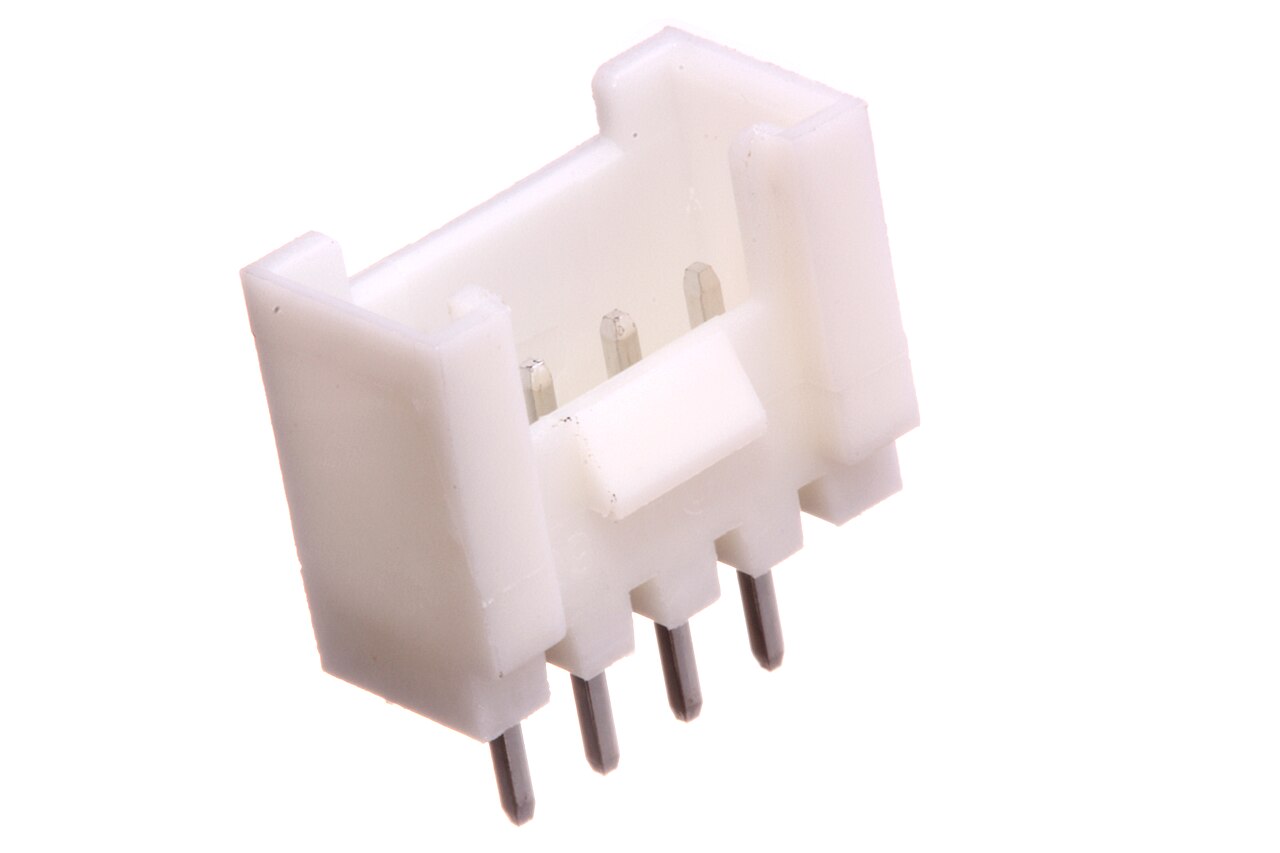
Exhibit A: a "JST connector" as sold — white, shrouded, latchy-looking. The listing names no series; the drawing does. Photo: oomlout, CC BY-SA 2.0, via Wikimedia Commons.
The series you'll actually meet
Every pitch below is sourced from the official JST series datasheet (or JST's official product page) footnoted on its row; the footnotes also carry each series' headline rating. Two standing caveats: those figures describe genuine JST parts assembled per the datasheet — clone and "compatible" parts are not covered — and a headline current is still contact-, gauge-, and application-dependent (power vs signal).
| Common name | Typical pitch | Common use | Connector type | Common confusion |
|---|---|---|---|---|
| JST-XH | 2.5 mm1 | 3D printers, balance leads, low-cost wire-to-board | wire-to-board | confused with PH/VH/KF-style terminal blocks |
| JST-PH | 2.0 mm2 | small batteries, sensors, small boards | wire-to-board | confused with XH or generic battery connectors |
| JST-EH | 2.5 mm3 | printers, appliances, general internal signal | wire-to-board | same 2.5 mm pitch as XH but a slimmer, different family — housings and contacts don't interchange |
| JST-SH | 1.0 mm4 | Qwiic/STEMMA QT-style tiny I2C boards | wire-to-board | confused with GH or other 1 mm-ish connectors |
| JST-GH | 1.25 mm5 | compact locking harnesses, drones, embedded systems | wire-to-board | confused with SH due to size |
| JST-ZH | 1.5 mm6 | compact sensor and camera leads | wire-to-board | the in-between size — bigger than GH (1.25), smaller than PH (2.0), and routinely misnamed as both |
| JST-SM | 2.5 mm7 | LED strings/strips, low-voltage wire-to-wire harnesses | wire-to-wire | often sold as generic LED connectors or "JST-SM-style" — see JST-SM and LED string connectors |
| JST-RCY / BEC style | 2.5 mm8 | small battery leads, RC-ish power | wire-to-wire | often called a "JST battery connector," which names nothing |
Three practical consequences:
- 2.5 mm (XH) and 2.0 mm (PH) look nearly identical in photos. A PH battery pigtail will not mate an XH header, and forcing it damages both. Measure the pitch.
- The housing and the contact are separate parts, per series. An XH housing needs XH contacts — not PH contacts, not "Dupont" contacts, not whatever came in the kit drawer. See Crimping.
- A "JST battery lead" from a marketplace could be PH, XH, RCY, SM, or a clone of any of them. Identify before you order the mate — see Buying the Right Mating Parts.
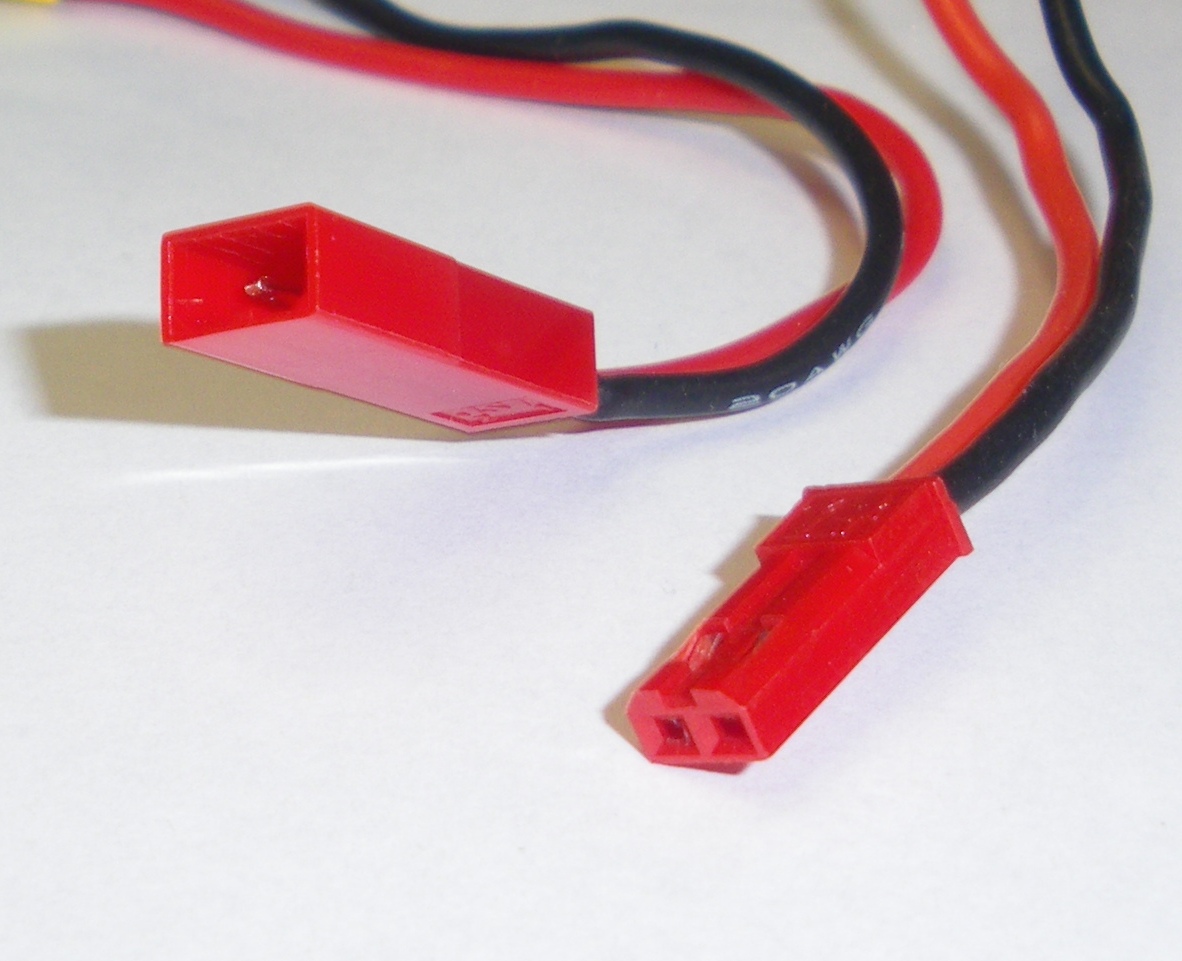
The red pair behind most "JST battery connector" listings is the RCY series (2.5 mm, wire-to-wire) — not SM, not PH, not XH. Photo: Mike mahoney aus4810, CC BY-SA 4.0, via Wikimedia Commons.
The vocabulary doing the work here — pitch, contact vs. terminal, housing, the male/female ambiguity, genuine vs. clone — is pinned down in the shared Glossary.
Sources
All figures are for genuine JST parts assembled per the datasheet; clones and "compatible" parts are not covered by them. See also the engineering track's consumer/hobby connectors §12.